
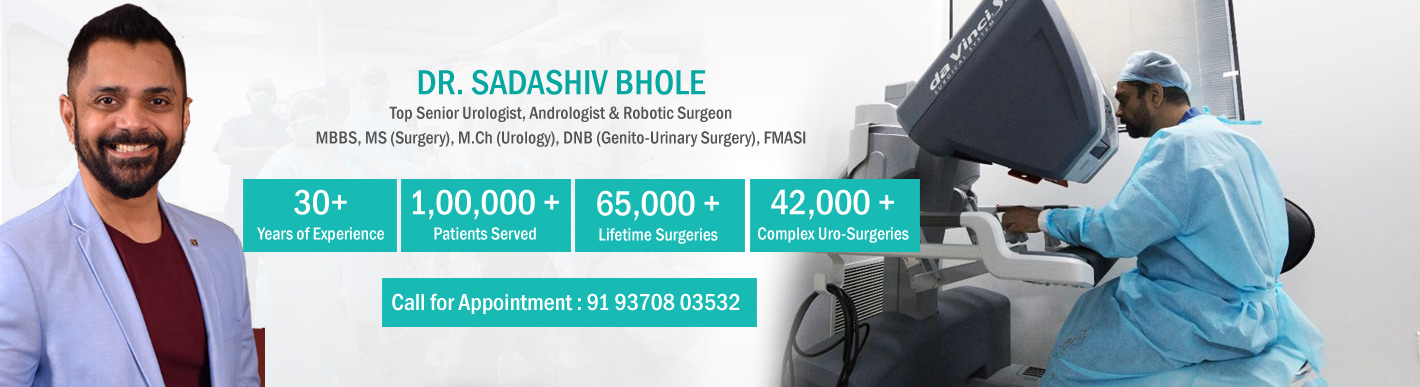
Percutaneous Nephrolithotomy (PCNL) is a minimally invasive surgical procedure used to remove large or complex kidney stones that cannot be treated effectively by other less invasive methods. Dr. Sadashiv Bhole at Ketki Nursing Home & Bhole Urology Hospital offers expert PCNL services in Nagpur, providing advanced care for patients with significant kidney stone burdens.
What is PCNL?
PCNL involves making a small incision in the back through which a narrow tube (sheath) is inserted directly into the kidney. A small camera (nephroscope) is passed through this tract allowing the surgeon to locate, break, and remove kidney stones using specialized instruments and energy sources such as laser or ultrasound.
Why is PCNL Performed?
- To treat large kidney stones or staghorn stones that are unlikely to pass on their own
- For stones causing persistent pain, infection, or obstruction
- When other procedures such as shock wave lithotripsy or ureteroscopy are not feasible or have failed
- To achieve rapid stone clearance and restore kidney function
PCNL Procedure Overview
- You will be placed under general anesthesia to ensure comfort and painlessness during surgery.
- Positioned usually face down (prone position) on the operating table to access the back.
- Using real-time X-ray or ultrasound guidance, a small needle is inserted through the skin into the kidney’s collecting system.
- This needle tract is gradually dilated to accommodate the insertion of the nephroscope.
- Stones are visualized with the nephroscope, fragmented using laser, ultrasonic, or pneumatic energy devices, and removed through the sheath.
- A temporary drainage tube (nephrostomy tube) may be placed into the kidney to allow urine drainage and help healing.
- Sometimes, a stent is inserted into the ureter to maintain urine flow after the procedure.
The entire surgery usually takes about 1 to 2 hours depending on stone size and complexity.
Benefits of PCNL with Dr. Sadashiv Bhole
- Highly effective for removing large or complex kidney stones in a single procedure
- Minimally invasive compared to open surgery with smaller incisions
- Shorter hospital stay and faster recovery than traditional open surgery
- Reduced risk of complications due to modern imaging and instrumentation
- Allows for precise stone clearance and immediate symptom relief
Recovery and Aftercare
- Hospital stay is typically 1 to 3 days depending on patient condition and procedure complexity
- Mild pain or discomfort at the incision site is common and managed with medication
- Blood in urine and mild urinary symptoms can occur temporarily
- Patients are advised to drink plenty of fluids to flush the urinary system
- Heavy lifting and strenuous activities should be avoided for a few weeks
- Follow-up includes imaging to confirm complete stone clearance and removal of any stents or nephrostomy tubes
Location & Contact Details
Dr. Sadashiv Bhole
Ketki Nursing Home & Bhole Urology Hospital
Plot No. 12/2, Second Floor, Hyatt Medicare,
Khare Marg, Dhantoli-440012, Nagpur, Maharashtra
Phone: +91 93708 03532
Email: bholeurology@gmail.com
Frequently Asked Questions (FAQs)
1. What types of kidney stones are treated with PCNL?
Large stones (>2 cm), staghorn calculi, and stones resistant to other treatments are best treated with PCNL.
2. Is PCNL painful?
You will be under general anesthesia during the procedure, so there is no pain during surgery. Postoperative discomfort is usually mild and managed effectively.
3. How long does the PCNL surgery take?
The procedure typically lasts 1 to 2 hours depending on stone size and complexity.
4. What are the risks or complications?
While PCNL is generally safe, risks include infection, bleeding, injury to surrounding organs, or incomplete stone removal. These are rare and minimized by expert technique.
5. Will I have a tube after surgery?
A nephrostomy tube is often placed temporarily to drain urine from the kidney during healing and is usually removed within a few days after surgery.
6. How long is the recovery period?
Most patients stay in the hospital 1 to 3 days and can resume normal activities within 2 to 4 weeks.
7. Are there alternatives to PCNL?
Smaller stones may be treated with shock wave lithotripsy or ureteroscopy, but PCNL is preferred for large or complex stones.
8. How do I schedule a PCNL consultation with Dr. Sadashiv Bhole?
Call +91 93708 03532 or email bholeurology@gmail.com to book your appointment.
For safe, effective, and cutting-edge kidney stone treatment with PCNL in Nagpur, trust Dr. Sadashiv Bhole and the expert team at Ketki Nursing Home & Bhole Urology Hospital.
