
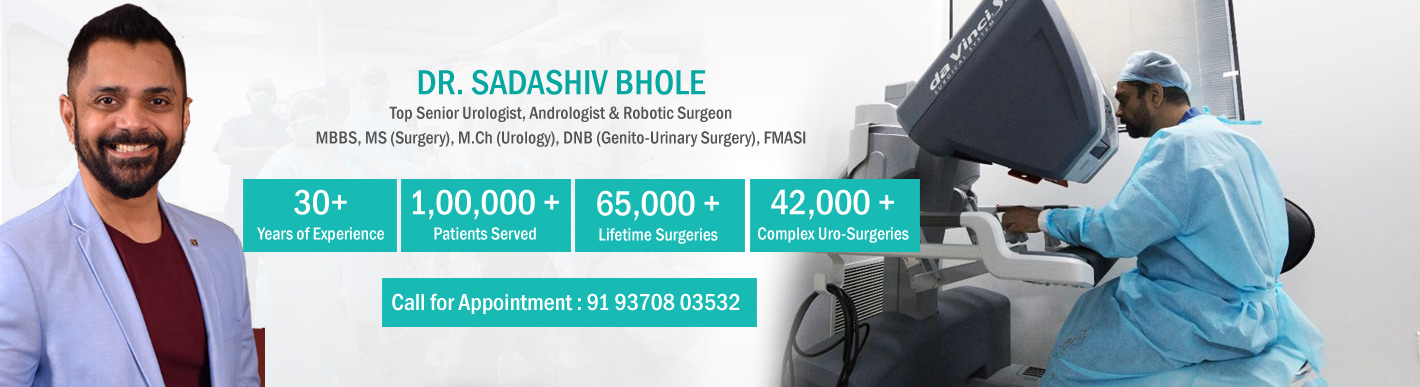
Robotic Surgery for Urological Conditions: Consult Dr. Sadashiv Bhole in Nagpur
Robotic surgery has become an important part of modern urological care for selected complex conditions. It combines advanced surgical instruments, high-definition visualization and precise surgeon-controlled movements to perform certain procedures through minimally invasive techniques. In Nagpur, patients with appropriate urological conditions can consult Dr. Sadashiv Bhole, Senior Urologist, Andrologist & Robotic Surgeon, for evaluation and individualized surgical planning.
It is important to understand that robotic surgery is not required for every urological condition. Kidney stones, simple urinary problems and many routine conditions may be better managed with other endoscopic or minimally invasive procedures. Robotic technology is considered when its advantages are relevant to the particular anatomy, disease and surgical objective.
What Is Robotic Urology Surgery?
Robotic Urology Surgery is a form of minimally invasive surgery in which the surgeon controls specialized robotic instruments from a console. The robotic system does not independently perform the operation. Instead, the surgeon directs every surgical movement while the system provides enhanced instrument control and visualization.
The technology may be particularly useful when surgery involves delicate structures, confined anatomical spaces or procedures requiring detailed dissection and reconstruction. Patients considering robotic procedures can learn more through Robotic Urology Surgery information provided by Dr. Sadashiv Bhole.
How Robotic Surgery Works
During robotic surgery, several small access points may be created depending on the procedure. A camera and specialized instruments are introduced through these openings. The surgeon views the operative field on a high-definition display and controls the instruments using hand movements at the surgical console.
- Detailed visualization: The camera provides a magnified view of the surgical area.
- Controlled instrument movement: Robotic instruments can provide precise movements within the operative field.
- Minimally invasive access: Selected procedures can be performed through relatively small incisions.
- Complex reconstruction: The technology can be useful for selected reconstructive urological operations.
- Surgeon-controlled procedure: The surgeon remains responsible for planning and controlling the operation.
Which Urological Conditions May Be Treated With Robotic Surgery?
Robotic technology can be used for selected urological procedures involving the prostate, kidneys, urinary tract and surrounding structures. The suitability of robotic surgery depends on the diagnosis, disease stage, anatomy and complexity of the required operation.
- Selected prostate cancer cases requiring prostate removal
- Selected kidney tumors or masses requiring kidney surgery
- Complex reconstructive procedures involving the urinary tract
- Selected ureteric reconstruction procedures
- Other complex urological operations where robotic visualization and instrument control may be beneficial
Patients should not assume that every urinary problem requires robotic surgery. An experienced Urological Specialist first determines the diagnosis and then selects the most appropriate surgical approach.
Robotic Prostatectomy: When Is It Considered?
Robotic prostatectomy is primarily associated with selected cases of prostate cancer in which surgical removal of the prostate is indicated. It is different from routine procedures used for benign enlargement of the prostate.
During a robotic prostatectomy, the surgeon carefully removes the prostate and addresses surrounding structures according to the patient’s cancer characteristics and surgical plan. Preservation of important anatomical structures may be considered when clinically appropriate.
The decision to undergo robotic prostatectomy depends on factors such as the type and stage of prostate cancer, overall health, prostate anatomy and treatment objectives. A detailed consultation is therefore essential before deciding on the surgical approach.
Robotic Kidney Surgery
Robotic Kidney Surgery may be considered for selected kidney tumors, masses and other complex surgical conditions. Depending on the location and characteristics of a kidney lesion, the surgeon may determine whether part of the kidney can be preserved or whether a different surgical procedure is necessary.
Kidney-preserving surgery may be particularly important in selected patients because maintaining healthy functioning kidney tissue can be an important part of long-term care. However, the exact operation depends on the location, size and nature of the kidney condition.
Patients seeking advanced surgical evaluation can explore High-Precision Surgery and discuss whether a robotic approach is appropriate for their specific diagnosis.
Robotic Surgery for Ureteric Conditions
The ureters are narrow tubes that carry urine from the kidneys to the bladder. Narrowing of the ureter, known as a ureteric stricture, can interfere with normal urine drainage. Depending on the location, length and severity of the narrowing, different reconstructive procedures may be considered.
Patients with ureteric narrowing can explore Affordable ureteric stricture treatment and discuss whether an endoscopic, reconstructive or robotic procedure is suitable.
Robotic reconstruction may be useful in selected complex ureteric cases because the surgeon can work with enhanced visualization and precise instrument control. However, robotic surgery is not automatically required for every ureteric stricture.
Robotic Surgery and Kidney Stones: An Important Difference
Patients frequently search for robotic treatment after learning about advanced urological surgery, but ordinary kidney stones are generally not treated with robotic surgery. Depending on the stone’s size, location and clinical characteristics, endoscopic stone procedures or laser techniques may be more appropriate.
Patients looking for Affordable laser kidney stone surgery can undergo an evaluation to determine whether laser stone fragmentation is appropriate. The procedure commonly involves reaching the stone through the urinary tract with an endoscopic instrument and fragmenting the stone using laser energy.
For a broader understanding of available approaches, patients can also review Best Treatment Options for Kidney Stones. The appropriate procedure should be selected according to the patient’s individual stone characteristics rather than simply choosing the most technologically advanced option.
Symptoms That May Lead to Robotic Urological Evaluation
Robotic surgery is a treatment technique rather than a diagnosis. Patients generally reach a robotic urologist because investigations identify a condition for which surgery may be appropriate. Symptoms vary according to the affected organ.
- Difficulty passing urine
- Progressively weak urinary stream
- Repeated urinary obstruction
- Blood in the urine
- Persistent flank or abdominal discomfort
- Changes in urinary frequency or bladder emptying
- Symptoms associated with an enlarged prostate
- Symptoms associated with a kidney mass or other urinary tract condition
- Recurrent urinary problems caused by structural abnormalities
Common Causes of Conditions Requiring Complex Urological Surgery
The conditions that may require robotic or other advanced urological procedures have different causes. Proper diagnosis is therefore more important than selecting a surgical technology first.
- Prostate cancer may develop from abnormal growth of prostate cells.
- Kidney tumors can arise from abnormal growth of kidney tissue.
- Ureteric strictures may develop after previous procedures, injury, inflammation or other structural causes.
- Congenital urinary abnormalities may sometimes require reconstructive surgery.
- Complex urinary tract conditions may result from previous surgery, obstruction or anatomical abnormalities.
Steps Involved in Robotic Urological Surgery
The exact procedure differs according to the condition, but robotic surgery generally follows a structured process from diagnosis to recovery.
- Step 1 – Detailed consultation: The patient’s symptoms, medical history and previous procedures are reviewed.
- Step 2 – Diagnostic evaluation: Imaging, laboratory investigations and other tests are performed when required.
- Step 3 – Surgical planning: The surgeon determines whether surgery is appropriate and whether a robotic approach offers a meaningful advantage.
- Step 4 – Preoperative preparation: The patient receives procedure-specific instructions and undergoes appropriate preoperative assessment.
- Step 5 – Robotic procedure: The surgeon controls the robotic instruments to perform the planned operation.
- Step 6 – Postoperative monitoring: Urinary function, wound condition and general recovery are monitored.
- Step 7 – Follow-up: Follow-up appointments help assess recovery and the outcome of the procedure.
Potential Advantages of Robotic Urological Surgery
For appropriately selected patients, robotic surgery can provide several technical advantages. These advantages do not mean that robotic surgery is automatically superior for every condition; its value depends on the individual operation.
- Enhanced three-dimensional visualization of the operative field
- Precise control of specialized surgical instruments
- Ability to perform delicate movements in confined anatomical areas
- Potentially smaller access incisions compared with some conventional operations
- Detailed dissection and reconstruction in selected complex procedures
- Minimally invasive surgical access in appropriate cases
Patients can learn more about Minimally Invasive Urological Surgery and how different approaches may be selected according to the underlying condition.
Robotic Surgery Versus Conventional Surgery
The choice between robotic, laparoscopic, endoscopic and open surgery depends on the clinical problem. Robotic surgery provides specialized instruments and visualization, while other surgical approaches may be more suitable for different conditions.
- Robotic surgery: Useful for selected complex procedures requiring precise instrument control.
- Laparoscopic surgery: Uses small incisions and specialized instruments without robotic assistance.
- Endoscopic surgery: Uses natural urinary passages or other access routes and is commonly relevant for selected urinary tract conditions.
- Open surgery: May still be appropriate for certain complex conditions when another approach is not suitable.
The goal should always be to select the most appropriate procedure for the patient, rather than choosing a surgical method solely because it uses advanced technology.
Enlarged Prostate and Robotic Surgery
Enlarged prostate is a common cause of urinary symptoms in ageing men, including weak urine flow, difficulty starting urination, frequent nighttime urination and incomplete bladder emptying.
Most benign prostate enlargement procedures are not robotic operations. Depending on the prostate size, anatomy and degree of obstruction, endoscopic or other prostate procedures may be considered. Patients can learn more about Enlarged Prostate Treatment before discussing the most appropriate procedure.
Robotic prostatectomy, in contrast, is generally performed for selected prostate cancer cases where removal of the prostate is indicated. Understanding this distinction helps patients make informed decisions about their urological care.
Urological Conditions Beyond Robotic Surgery
A comprehensive Urological Specialist may manage many conditions that do not require robotic surgery. Choosing the appropriate treatment begins with accurate diagnosis.
- Cystoscopy Specialist for selected urethral and bladder evaluations
- Cystolithopexy Specialist for selected bladder stone procedures
- Hydrocele EOS Specialist for selected hydrocele procedures
- Hypospadias Repair Specialist for reconstructive treatment of selected congenital urethral abnormalities
- Meatotomy Specialist for selected narrowing at the urethral opening
- Circumcision Specialist for appropriate indications
Andrology and Male Reproductive Health
Urology also overlaps with andrology, the medical field concerned with male reproductive health and sexual function. Patients may require an Andrologist or Andrology consultation for concerns involving reproductive function, sexual health, testicular conditions or related genitourinary problems.
- Erectile Dysfunction Treatment after appropriate evaluation
- Delayed ejaculation treatment when persistent symptoms require specialist assessment
- Hormone Imbalance in Men evaluation when clinically indicated
- Testicular Pain Specialist consultation for testicular or scrotal symptoms
- Male Reproductive System Doctor consultation for selected reproductive concerns
- Men’s Sexual Wellness Clinic services for confidential male sexual health evaluation
Sudden severe testicular pain should receive urgent medical evaluation because testicular torsion is a possible cause and requires time-sensitive assessment.
Other Specialist Urological and Surgical Services
Dr. Sadashiv Bhole’s broader surgical expertise also covers several conditions beyond robotic urology. Depending on the diagnosis and clinical requirement, patients may seek services including Biopsy Specialist, Appendectomy Specialist, Cholecystectomy Specialist and AVF (Arteriovenous Fistula) Specialist.
Patients can also explore Advanced Urology Treatments Available for a broader overview of the urological services provided.
For patients who require abdominal or general surgical procedures, services such as Affordable Hernia Repair Surgery may also be considered when clinically appropriate.
What Patients Should Expect Before Robotic Surgery
A robotic procedure begins well before entering the operating room. A detailed assessment helps determine whether surgery is necessary and whether robotic technology is appropriate.
- Detailed review of symptoms and medical history
- Physical examination as clinically appropriate
- Review of previous scans and medical records
- Imaging specific to the affected organ
- Laboratory evaluation when required
- Discussion of the proposed procedure and expected recovery
- Assessment of potential surgical risks and alternatives
- Individualized preoperative planning
Recovery After Robotic Urological Surgery
Recovery varies according to the procedure, patient’s health, surgical complexity and whether reconstruction or organ removal was performed. Minimally invasive access may support recovery in appropriate cases, but patients should understand that every major operation requires adequate healing and follow-up.
- Follow postoperative instructions carefully.
- Attend scheduled follow-up appointments.
- Monitor urinary function and wound condition.
- Gradually return to normal physical activities according to medical advice.
- Report unusual bleeding, fever, increasing pain, difficulty passing urine or other concerning symptoms promptly.
When Should You Consult a Robotic Urologist?
Patients do not necessarily need to seek a robotic surgeon simply because they have a urinary problem. The appropriate starting point is a qualified urological consultation. If investigations identify a condition for which robotic surgery may provide a suitable approach, the surgeon can explain the potential benefits, limitations and alternatives.
Patients considering advanced surgical care can consult a Robotic Surgery Specialist to understand whether robotic technology is appropriate for their condition.
Frequently Asked Questions About Robotic Urological Surgery
What is robotic urological surgery?
Robotic urological surgery is a minimally invasive surgical approach in which the surgeon controls specialized robotic instruments while viewing the operative field through a high-definition camera system. The surgeon remains in control of the procedure.
Is robotic surgery suitable for every urological condition?
No. Robotic surgery is appropriate only for selected conditions and procedures. Kidney stones, for example, are generally treated using stone-specific endoscopic or other minimally invasive techniques rather than robotic surgery.
Is robotic surgery used for kidney stones?
Routine kidney stone treatment generally does not require robotic surgery. Depending on stone size and location, endoscopic procedures and laser stone fragmentation may be considered.
What is robotic prostatectomy used for?
Robotic prostatectomy is primarily used for selected prostate cancer cases where surgical removal of the prostate is indicated. It is different from procedures used to treat benign prostate enlargement.
What is robotic kidney surgery?
Robotic kidney surgery may be used for selected kidney tumors, masses and complex kidney conditions. The exact operation depends on the size, location and characteristics of the kidney problem.
Does robotic surgery mean the operation is performed by a robot?
No. The surgeon controls the robotic system throughout the procedure. The robotic platform provides specialized instruments and visualization but does not independently decide or perform the operation.
What are the potential benefits of robotic surgery?
For suitable procedures, robotic technology can provide enhanced visualization, precise instrument control and access to difficult anatomical areas. Whether these advantages translate into meaningful benefits depends on the specific operation and patient.
Can an enlarged prostate be treated with robotic surgery?
Most procedures for benign prostate enlargement are not robotic. Robotic prostatectomy is primarily associated with selected prostate cancer surgery. The appropriate procedure for benign prostate enlargement depends on prostate size, anatomy and urinary obstruction.
What symptoms require urgent urological attention?
Complete inability to pass urine, severe urinary obstruction, severe flank pain with fever or chills, significant blood in urine, or sudden severe testicular pain should receive prompt medical evaluation.
Why is consultation important before choosing robotic surgery?
Advanced technology is not automatically the correct treatment. A urologist must first establish the diagnosis, evaluate the anatomy and determine whether robotic, endoscopic, laparoscopic, open or another procedure is most appropriate.
Consult Dr. Sadashiv Bhole for Advanced Urological Care in Nagpur
Robotic surgery has expanded the possibilities of minimally invasive treatment for selected complex urological conditions. However, the most important step is not simply choosing robotic technology; it is obtaining an accurate diagnosis and selecting a procedure that matches the patient’s specific condition, anatomy and treatment goals.
Dr. Sadashiv Bhole, Senior Urologist, Andrologist & Robotic Surgeon, provides evaluation and surgical care for a wide range of urological and male reproductive conditions in Nagpur. Patients can discuss kidney, prostate, ureteric, urinary, reproductive and other genitourinary disorders and understand whether minimally invasive or robotic surgery is appropriate.
For patients seeking a Robotic Urologist in Nagpur, an individualized consultation can help clarify the diagnosis, available procedural options, expected recovery and the role of advanced surgical technology. This approach supports informed decision-making while ensuring that treatment remains focused on the patient’s actual medical needs.
Disclaimer: The information provided in this article is for educational purposes only and should not be substituted for professional medical advice, diagnosis, or treatment. Always seek the advice of your physician regarding any medical condition.