
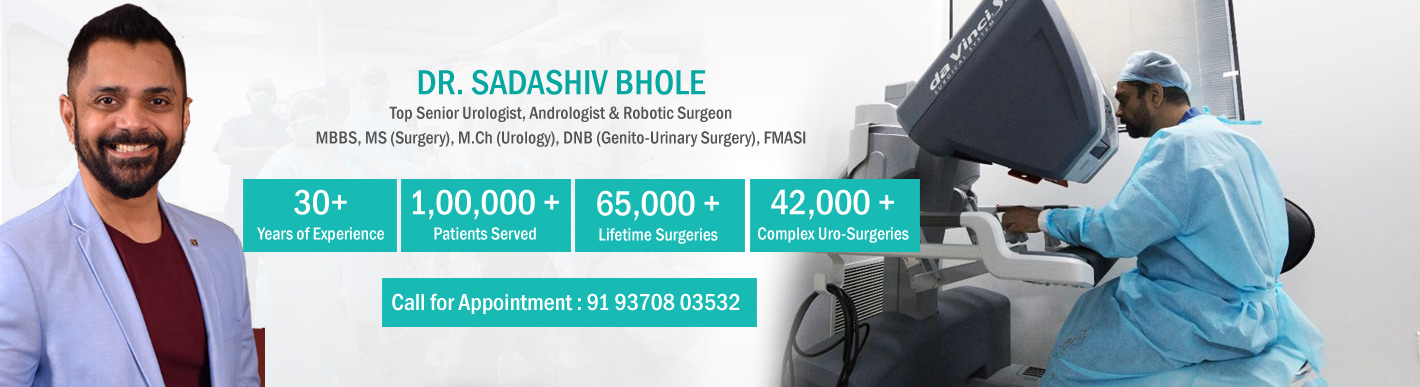
Cystolithopexy Specialist in Nagpur India : Cystolithopexy is a surgical procedure designed to remove bladder stones that are too large or complex for minimally invasive treatment. Dr. Sadashiv Bhole at Ketki Nursing Home & Bhole Urology Hospital offers expert cystolithopexy services in Nagpur, with over 300 successful cystolithopexy surgeries performed. This extensive experience ensures precise treatment and excellent patient outcomes.
What is Cystolithopexy?
Cystolithopexy involves accessing the bladder via a small incision (open or laparoscopic) to directly remove large or multiple bladder stones. This traditional approach is preferred when stones cannot be fragmented or removed via urethral endoscopy methods. It is often combined with treatments addressing underlying conditions such as bladder outlet obstruction.
Why is Cystolithopexy Performed?
- To remove large or multiple bladder stones not manageable by endoscopic methods
- For patients with complicated bladder stone disease
- When associated with other lower urinary tract surgeries requiring bladder access
- To prevent recurrent urinary infections, pain, and urinary obstruction caused by stones
Cystolithopexy Procedure Overview
- Performed under general or spinal anesthesia
- A small suprapubic incision is made to access the bladder directly
- Stones are carefully extracted from the bladder
- The bladder is inspected for other pathologies and repaired if required
- The incision is then closed in layers after ensuring stone removal
Benefits of Cystolithopexy with Dr. Sadashiv Bhole
- Effective removal of large and multiple bladder stones in one procedure
- Direct visual access to the bladder ensures complete stone clearance
- Can be combined with other bladder or prostate surgeries as needed
- High success rates with low recurrence when underlying causes are addressed
- Performed by a seasoned urologist with over 300 such surgeries completed
Recovery and Aftercare
- Hospital stay typically 2 to 4 days depending on the surgery complexity
- Postoperative pain managed effectively with medication
- Catheterization is required for a few days post-surgery to allow bladder healing
- Patients encouraged to increase fluid intake and avoid strenuous activity for several weeks
- Follow-up visits monitor healing, urinary function, and any residual stones
Location & Contact Details
Dr. Sadashiv Bhole
Ketki Nursing Home & Bhole Urology Hospital
Plot No. 12/2, Second Floor, Hyatt Medicare,
Khare Marg, Dhantoli-440012, Nagpur, Maharashtra
Phone: +91 93708 03532
Email: bholeurology@gmail.com
Frequently Asked Questions (FAQs)
1. When is cystolithopexy preferred over less invasive procedures?
When bladder stones are too large, multiple, or hard to fragment via cystoscopy or lithotripsy.
2. Is cystolithopexy painful?
The procedure is done under anesthesia, so there is no pain during surgery. Postoperative pain is controlled with medications.
3. How long is the hospital stay?
Typically 2 to 4 days depending on the condition and recovery progress.
4. What aftercare is needed?
Catheter care, adequate hydration, wound monitoring, and avoiding heavy lifting are important.
5. Can cystolithopexy prevent stone recurrence?
It effectively removes existing stones; addressing underlying causes reduces recurrence risk.
6. How do I schedule a consultation for cystolithopexy?
Call +91 93708 03532 or email bholeurology@gmail.com to book an appointment with Dr. Sadashiv Bhole. For expert, safe, and comprehensive care of bladder stones with cystolithopexy in Nagpur, trust the experienced hands of Dr. Sadashiv Bhole at Ketki Nursing Home & Bhole Urology Hospital