
Importance of Early Urology Consultation in Nagpur
Urological problems can begin with symptoms that may appear minor, such as frequent urination, burning while passing urine, difficulty starting urination, or occasional pain. However, ignoring these signs may allow an underlying urinary tract, kidney, bladder, prostate, or male reproductive system problem to progress. Early urology consultation can help identify the cause at an earlier stage and allow appropriate treatment before symptoms become more complicated.
Why Early Urology Consultation Is Important
A urologist evaluates conditions involving the kidneys, ureters, urinary bladder, urethra, prostate and male reproductive system. Early assessment is particularly useful when symptoms persist, recur, or interfere with daily life. Depending on the condition, timely consultation may help prevent complications such as urinary obstruction, recurrent infections, kidney damage, bladder problems or worsening prostate-related symptoms.
For patients seeking Advanced Urology Treatments Available, an early consultation allows the urologist to understand the symptoms, review medical history and select appropriate diagnostic tests before deciding whether medication, observation, minimally invasive treatment or surgery is required.
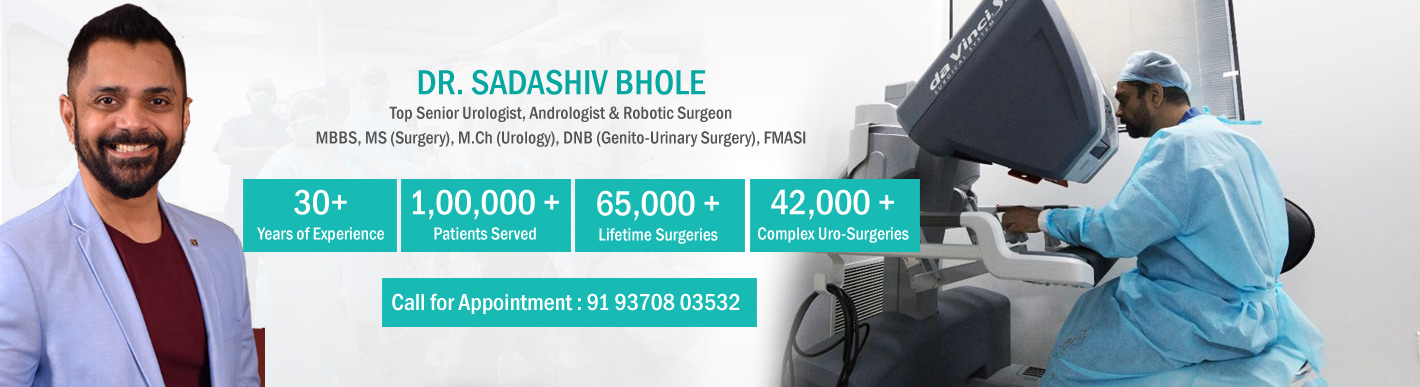
Meet Dr. Sadashiv Bhole – Senior Urologist, Andrologist & Robotic Surgeon in Nagpur
Dr. Sadashiv Bhole is a Senior Urologist, Andrologist and Robotic Surgeon practicing in Nagpur, with expertise in advanced urology, minimally invasive procedures, robotic surgery, reconstructive urology and men’s health. His clinical practice covers kidney and urinary tract disorders, prostate conditions, urinary obstruction, kidney stones and a wide range of male reproductive and sexual health concerns. His official profile describes extensive experience in advanced robotic, urological and andrological surgery, including complex cases.
Patients can consult Dr. Bhole for problems ranging from urinary symptoms and kidney stones to complex conditions requiring Robotic Surgery Specialist expertise. His approach focuses on accurate diagnosis, individualized treatment planning and the appropriate use of modern surgical techniques when required.
Warning Signs That Should Not Be Ignored
Not every urinary symptom indicates a serious disease, but persistent or recurrent symptoms deserve professional evaluation. You should consider consulting a Urological Specialist if you experience:
- Blood in the urine, even if it occurs only once.
- Burning or pain while urinating.
- Frequent or urgent urination.
- Difficulty starting or maintaining urine flow.
- Weak urine stream or incomplete bladder emptying.
- Urinary retention or inability to pass urine.
- Repeated urinary tract infections.
- Pain in the kidney, flank, abdomen or pelvis.
- Testicular pain, swelling or a lump.
- Erectile or ejaculation difficulties.
- Fertility or male reproductive health concerns.
When Kidney Stone Symptoms Need Urology Consultation
Kidney stones can cause sudden severe pain in the side or back, blood in urine, nausea, vomiting or urinary symptoms. Small stones may sometimes pass naturally, but larger stones, persistent obstruction, infection or recurrent stones may require specialist treatment. Dr. Sadashiv Bhole provides evaluation and treatment options ranging from conservative management to minimally invasive stone procedures when clinically appropriate.
Patients looking for Best Treatment Options for Kidney Stones can benefit from an assessment that considers stone size, location, symptoms, urinary obstruction and overall kidney health. Laser procedures may be considered for selected stones, including cases where active intervention is recommended.
For suitable patients, Affordable Laser Kidney Stone Surgery may offer a minimally invasive approach to stone treatment. The exact procedure depends on the individual patient’s condition and imaging findings.
Prostate Symptoms and the Importance of Early Evaluation
As men age, prostate enlargement may cause urinary frequency, weak urine flow, difficulty starting urination, nighttime urination and incomplete bladder emptying. These symptoms should not automatically be considered a normal part of ageing because similar symptoms can occur with other prostate or urinary tract conditions.
Early assessment can help determine whether the symptoms are related to benign prostate enlargement, infection, urinary obstruction or another condition. Appropriate management may include lifestyle changes, medication, monitoring or a procedure when necessary. Patients can learn more about Enlarged Prostate Treatment as part of specialist urological care.
Urinary Retention Requires Prompt Attention
Urinary retention means being unable to empty the bladder properly or, in acute cases, being unable to pass urine at all. It may occur because of prostate enlargement, urethral narrowing, stones, neurological conditions, medications or other urinary tract problems. Acute inability to urinate requires prompt medical attention.
Depending on the cause, urinary retention treatment may involve bladder drainage, medicines, treatment of an obstruction or a surgical procedure. Early diagnosis is important because prolonged obstruction can affect bladder and kidney function.
Ureteric Blockage and Urinary Obstruction
A blockage in the ureter can interfere with the normal flow of urine from the kidney to the bladder. Kidney stones, strictures, scarring and other structural problems may contribute to obstruction. Depending on its severity, untreated obstruction may affect kidney function or become associated with infection.
Patients searching for a Best & Affordable Doctor for Ureter Blockage should undergo appropriate evaluation rather than delaying consultation. Treatment depends on the location and cause of the blockage and may involve endoscopic, laser, reconstructive or other minimally invasive procedures.
Male Sexual and Reproductive Health Concerns
Urology also includes male reproductive and sexual health. Problems such as erectile dysfunction, delayed ejaculation, testicular pain, fertility difficulties and hormone-related concerns can affect confidence, relationships and quality of life. Early Andrology consultation can help identify potential physical, hormonal, medication-related or psychological contributors.
Dr. Sadashiv Bhole provides specialized care as an Andrologist, addressing men’s reproductive and sexual health concerns. Patients can also seek evaluation for conditions requiring Erectile Dysfunction Treatment or assessment of testicular pain and hormone imbalance in men.
How Is an Early Urology Consultation Performed?
The consultation generally begins with a detailed discussion of symptoms and medical history. The urologist then determines which examinations or investigations are appropriate. The diagnostic process may include:
- Detailed medical and symptom history.
- Physical examination when required.
- Urine tests to identify infection, blood or other abnormalities.
- Blood tests when kidney function or other parameters need assessment.
- Ultrasound for kidneys, bladder, prostate or urinary obstruction.
- CT or other imaging when stones or complex conditions are suspected.
- Cystoscopy when direct examination of the urethra or bladder is necessary.
For appropriate patients, a Cystoscopy Specialist can use endoscopic examination to evaluate certain bladder and urethral problems. The choice of investigation depends on the patient’s symptoms and clinical findings.
Procedure of Treatment After Diagnosis
There is no single treatment for all urological conditions. Once the underlying cause has been identified, treatment is generally planned according to the severity, location and nature of the problem.
- Step 1 – Assessment: Symptoms, medical history and previous reports are reviewed.
- Step 2 – Diagnosis: Appropriate urine, blood, imaging or endoscopic investigations are selected.
- Step 3 – Treatment planning: The urologist discusses observation, medication or procedural options according to the diagnosis.
- Step 4 – Minimally invasive treatment: When surgery is necessary, endoscopic, laser, laparoscopic or robotic approaches may be considered where appropriate.
- Step 5 – Follow-up: Recovery, symptoms and treatment response are monitored through scheduled follow-up.
Role of Minimally Invasive Urological Surgery
Modern urology increasingly uses techniques designed to treat selected conditions through smaller access points rather than large traditional incisions. Depending on the diagnosis, these may include endoscopic, laser, laparoscopic and robotic procedures.
For patients who require Minimally Invasive Urological Surgery, potential advantages may include smaller incisions, less tissue disruption and, in suitable procedures, reduced postoperative discomfort and faster recovery. However, the appropriate technique depends on the disease and individual patient factors.
Robotic Urology Surgery for Selected Complex Conditions
Robotic technology has become an important part of advanced urology, particularly for selected complex operations such as prostate and kidney procedures. Robotic systems allow the surgeon to control specialized instruments through small incisions and provide enhanced visualization and precise instrument movement.
Depending on the diagnosis, procedures may include Robotic Prostatectomy and Robotic Kidney Surgery. Patients can explore specialist information about Robotic Urology Surgery and High-Precision Surgery.
Why Patients Should Not Delay Urology Care
Delaying consultation may allow a treatable condition to become more difficult to manage. For example, recurrent urinary infections may sometimes be associated with stones, obstruction or other underlying abnormalities. Similarly, persistent urinary difficulty may indicate prostate enlargement or another condition requiring assessment. Early evaluation provides an opportunity to identify the cause instead of simply managing symptoms repeatedly.
Patients should particularly seek prompt medical attention for visible blood in urine, severe flank pain with fever, inability to urinate, severe testicular pain, or rapidly worsening urinary symptoms. Such symptoms may require urgent evaluation.
Comprehensive Urology Care by Dr. Sadashiv Bhole
Dr. Sadashiv Bhole offers specialist evaluation and treatment for a broad range of urinary and male reproductive conditions, including kidney stones, prostate disorders, urinary obstruction, ureteric problems, bladder conditions, male sexual health concerns and complex urological disorders. His practice also includes advanced robotic and minimally invasive approaches where clinically appropriate.
Patients requiring procedures such as Biopsy Specialist evaluation, Hydrocele EOS Surgery, Hypospadias Repair, Meatotomy, Cystolithopexy or other specialized procedures can receive condition-specific evaluation and treatment planning.
Frequently Asked Questions
Q1. When should I visit a urologist?
You should consider a urology consultation for persistent urinary symptoms, blood in urine, recurrent urinary infections, kidney or bladder pain, difficulty urinating, urinary retention, testicular symptoms, erectile dysfunction or fertility concerns.
Q2. Is blood in urine always a serious problem?
Blood in urine can have several causes, including infection, stones and other urinary tract conditions. Because some causes require prompt evaluation, unexplained visible blood in urine should not be ignored.
Q3. Can kidney stones be treated without surgery?
Some smaller stones may pass naturally and can sometimes be managed conservatively. Larger stones, persistent obstruction, infection or severe symptoms may require an active procedure. Treatment should be based on stone size, location and the patient’s overall condition.
Q4. What causes difficulty in urination in men?
Difficulty urinating can occur because of prostate enlargement, urethral narrowing, infection, stones, neurological problems or other urinary tract conditions. A urologist can determine the underlying cause.
Q5. Is urinary retention an emergency?
Acute inability to pass urine can require urgent medical attention. Prompt evaluation is important to relieve obstruction and identify the underlying cause.
Q6. What is the benefit of early urology consultation?
Early consultation can help identify the underlying cause of symptoms, prevent unnecessary delays in treatment and allow appropriate management before some conditions become more complicated.
Q7. Are minimally invasive procedures available in urology?
Yes. Depending on the condition, modern urology may use endoscopic, laser, laparoscopic or robotic techniques. The appropriate procedure is selected according to the diagnosis and individual patient factors.
Q8. Does every urological problem require surgery?
No. Many urological conditions can be managed with observation, lifestyle changes or medication. Surgery is considered when it is medically appropriate based on the condition, severity and response to other treatments.
Early urology consultation can play an important role in protecting urinary, kidney, prostate and male reproductive health. Persistent urinary symptoms, blood in urine, recurrent infections, kidney stone symptoms, urinary obstruction and sexual or reproductive concerns should be evaluated rather than ignored. With modern diagnostic techniques and treatment options, many urological conditions can be managed effectively when identified at the appropriate stage.
For patients in Nagpur seeking experienced specialist care, Dr. Sadashiv Bhole provides comprehensive urological and andrological evaluation along with advanced minimally invasive and robotic treatment options when clinically indicated.